



If you’ve just finished your first marathon — or are thinking about running one — congratulations! Marathons are incredibly challenging both physically and mentally. But the rewards are worth it: community, strength, discipline, and proving to yourself that you can do hard things.
That said, training for a marathon can be tough. Many runners face setbacks or injuries, but with smart training and recovery, you can stay strong and enjoy the process.
Training Principles
- Build Gradually
- Increase mileage by no more than 10% per week.
- Schedule a “down” or taper week every 4–6 weeks to let your body adapt.
- Plan for 4–6 months of consistent training before race day, depending on your current fitness and base mileage.
- Strength Train Weekly
Adding strength training 1–2 days per week supports your joints, muscles, and long-term running performance. Benefits include:
- Lower risk of injury
- Increased running efficiency and power
- Less soreness and tightness
- Improved muscle balance and posture
- More comfort and stability on long runs
- Warm Up and Cool Down
Don’t skip this! Moving and stretching lightly before and after runs helps your body perform better and recover faster. Running on “cold” muscles increases your risk of breakdown and soreness.
Strength Training
Running uses the entire body, not just your legs. Focus on: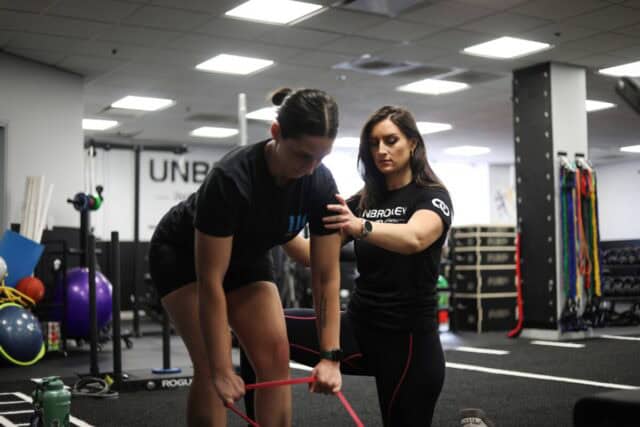
- Glutes, hamstrings, and hip flexors for power and stride stability
- Calves for push-off and endurance
- Core for control and balance
- Upper body for posture and arm drive
Great exercises to start with:
- Squats
- Lunges
- Hip bridges
- Calf raises
Aim for 2-3 sets of 12 reps each. Progress by adding weight or reps as you get stronger.
Recovery Principles
You don’t need to run every day!
3–4 runs per week is plenty for progress while giving your body time to recover.
During training, muscles and energy stores break down. Without proper recovery, fatigue builds up, easy runs feel hard, and aches may appear. To combat this:
- Take 1–2 rest or active recovery days per week
- Try light cycling, walking, yoga, or stretching to promote blood flow and healing
- Focus on sleep, hydration, and balanced nutrition
How Physical Therapy Helps
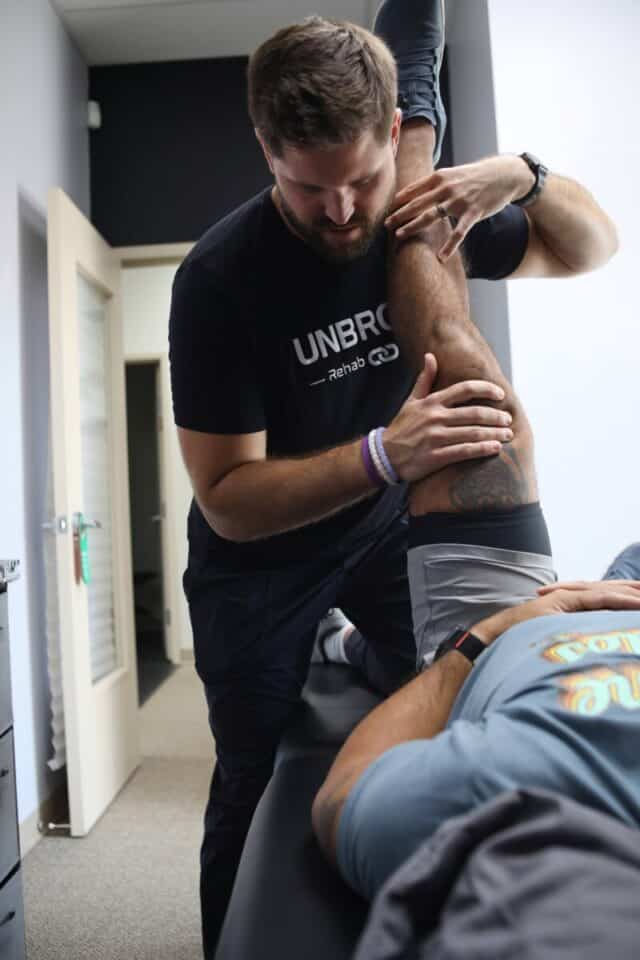
A physical therapist can evaluate your running form or your injury, and prescribe the most beneficial exercises or drills for you to stay strong and healthy.
Physical therapists also utilize recovery services to promote healing that include:
- Manual therapy
- Cupping or scraping (Graston)
- Compression therapy
- Dry needling
Post-Marathon Recovery
After a marathon, your body experiences:
- Muscle damage
- Inflammation
- Electrolyte imbalance
- Temporary immune suppression
This can leave you feeling sore, tired, or even “foggy.” The good news is that your body starts the recovery process immediately, and after a few days most runners feel like their energy is back to normal.
How long until you can run again?
- A 2021 study showed runners who did a short shakeout run 48 hours after the race recovered faster and had more muscle power than those who didn’t.
Still, always listen to your body — and give it rest, good food, sleep, and hydration before jumping back into training.
Need Support?
If you’re training for a marathon or recovering from one, our team is here to help. We specialize in treating runners and offer:
- Physical therapy for runners – we can treat you for injury prevention, or if you’re in the middle of training we can help patch up your weak links to get you optimized for race day. Whether this is your first race, or you’re trying to break your record, we’ve got your back
- Personalized training plans – our physical therapists also run 5ks 10ks, 1/2 marathons, and marathons. We understand the gradual progression that your body needs to be challenged with
- Recovery sessions – life is busy and missing a single day of training can set you back. We can help speed up your recovery to make sure that doesn’t happen
- Lastly, we are your guides during this process – we can stay in constant communication with you throughout this process and help put your mind at ease. The best we can do is put one foot in front of the other
Running through pain? You don’t have to — Unbroken Rehab and Athletics can help you stay on track safely. We have 4 locations to help runners across the Chicagoland area stay on the course. We have locations in Lakeview/Lincoln Park, West Loop, Park Ridge, and Wheeling. You don’t have to go through this alone. Contact us today to start your journey!
References
- Shi R, Zhang J, Fang B, Tian X, Feng Y, Cheng Z, Fu Z, Zhang J, Wu J. Runners’ metabolomic changes following marathon. Nutr Metab (Lond). 2020 Mar 13;17:19. doi: 10.1186/s12986-020-00436-0. Erratum in: Nutr Metab (Lond). 2020 Jul 7;17:53. doi: 10.1186/s12986-020-00468-6. PMID: 32190096; PMCID: PMC7071712.
- Martínez-Navarro I, Montoya-Vieco A, Hernando C, Hernando B, Panizo N, Collado E. The week after running a marathon: Effects of running vs elliptical training vs resting on neuromuscular performance and muscle damage recovery. Eur J Sport Sci. 2021 Dec;21(12):1668-1674. doi: 10.1080/17461391.2020.1857441. Epub 2021 Jan 18. PMID: 33251988.
- Chatgpt.com for image 1


